

Darwin Harbour Integrated Marine Monitoring and Research Program
The Darwin Harbour Integrated Marine Monitoring and Research Program (IMMRP) is a 40-year voluntary environmental offset program funded by INPEX-operated Ichthys LNG.
The Program is a joint venture between the Northern Territory Government (NTG) and INPEX Operations Australia Pty Ltd on behalf of Ichthys Partners.
The IMMRP aims to enhance monitoring and research activities undertaken in the harbour across 4 key themes to assess changes in harbour condition through time:
- anthropogenic pressures
- water quality
- benthic sediment quality
- biological health.
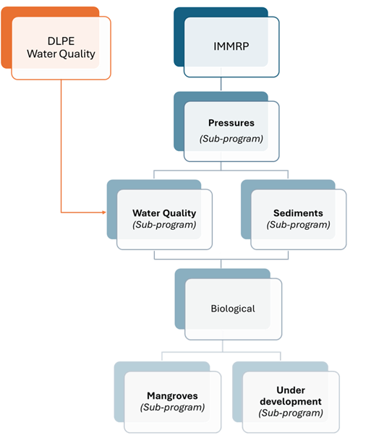 Figure 1: Overview of the Darwin Harbour Integrated Monitoring and Research Program (IMMRP)
The IMMRP applies long-term environmental monitoring underpinned by a suite of pilot studies. Further information on how these studies informed the long-term monitoring plans is available below.
Program data and reports
Monitoring data and annual reports are available via Territory Stories and below:
Anthropogenic pressure monitoring program
The theme looks at the pressures on Darwin Harbour and catchment areas.
Reports
The below reports are on the Territory Stories website:
- Anthropogenic Pressure Monitoring Plan: Version 2
- Darwin Harbour Integrated Marine Monitoring and Research Program Pressure Monitoring Report 2024-25
- Darwin Harbour Integrated Marine Monitoring and Research Program Pressure Monitoring Report 2023-24
- Darwin Harbour Integrated Marine Monitoring and Research Program Pressure Monitoring Report 2022-23
- An exploration of the associations between pressures and stressors in Darwin Harbour water quality parameters
- Anthropogenic pressures on Darwin Harbour: Darwin Harbour Integrated Marine Monitoring and Research Program Monitoring Report 2021-22
- Anthropogenic pressures on Darwin Harbour: Darwin Harbour Integrated Marine Monitoring Program Monitoring Report 2020-21
- Developing an integrated long-term monitoring program for Darwin Harbour. Anthropogenic pressure project: Development of pressure indicators for Darwin Harbour.
Water quality monitoring and research program
This theme monitors the water quality in Darwin Harbour.
It builds on the department’s ongoing work to look after the water quality.
The department also publishes an annual Darwin Harbour Report Card.
Reports
The below reports are on the Territory Stories website:
- Darwin Harbour Water Quality monitoring program analysis application manual
- Identifying sources of surface water turbidity in the Elizabeth River
- Developing an integrated long-term monitoring program for Darwin Harbour. Water Quality Pilot Project WP1: Neap tide trial
- Developing an integrated long-term monitoring program for Darwin Harbour. Water Quality Pilot Project WP2: Intra-annual water quality variability
- Interim turbidity water quality objectives for dry season neap tide conditions in Darwin Harbour
- A risk assessment of water quality pollution of Darwin Harbour using modelled catchment impacts on water quality.
Benthic sediment surveillance monitoring and research program
Seafloor sediments are monitored across Darwin Harbour.
Checks are done to see if pollutant concentrations are higher than they should be due to widespread human activities.
They monitor to see if any changes are occurring in concentrations of the following:
- metals and metalloids
- hydrocarbons
- other constituents.
This program shouldn’t be confused with compliance monitoring programs. These programs are done to ensure that a regulated body conforms to:
- environmental laws
- regulations
- standards.
Read more about compliance and regulation on the NTEPA website.
Reports
Read the below reports:
- Baseline benthic fluxes – supporting sediment quality monitoring of Darwin Harbour 2025
- Benthic sediment monitoring plan for Darwin Harbour: Version 2
- Darwin Harbour Integrated Marine Monitoring and Research Program Benthic Sediment Monitoring Report 2024-25
- Baseline benthic fluxes – supporting sediment quality monitoring of Darwin Harbour 2023
- Darwin Harbour Integrated Marine Monitoring and Research Program Benthic Sediment Monitoring Report 2023-24
- Darwin Harbour sediment monitoring program analysis application manual
- Darwin Harbour Integrated Marine Monitoring and Research Program Benthic Sediment Monitoring Report 2022-23 and ambient per- and polyfluoroalkyl substance (PFAS) study
- Darwin Harbour Sediment Monitoring Design Optimisation - go to the Australian Government’s Australian Institute of Marine Science website
- Assessment of sediment quality indicators for long term monitoring in Darwin Harbour: Final report - go to the Territory Stories website
- Sediment quality assessment of Middle Arm and West Arm, Darwin Harbour (2020): Survey record and data report
- Sediment quality assessment of Outer Darwin Harbour (2020): Survey record and data report
- Sediment quality assessment of East Arm, Darwin Harbour (2019): Survey record and data report
- Sediment quality sampling design for Darwin Harbour (Version 1)
- Darwin Harbour mangrove sediment: metal and arsenic dynamics
- Development of a long-term sediments monitoring program for Darwin Harbour: A final report on the Rod Surface Elevation Table – Marker Horizon Pilot project MP2
- Background concentrations of metals and metalloids and their distribution in Darwin Harbour sediment.
Biological monitoring and research programs
Habitat monitoring focuses on the mangroves.
It makes use of satellites and drones to watch mangrove extent and condition.
Reports
The below reports are on the Territory Stories website:
- Darwin Harbour Integrated Marine Monitoring and Research Program Mangrove Monitoring Report 2024 – 2025: Mangrove Health 2024
- Darwin Harbour Integrated Marine Monitoring and Research Mangrove extent mapping review from 2016 to 2023
- Darwin Harbour Integrated Marine Monitoring and Research Program Mangrove Monitoring Report 2023 – 2024: Mangrove Health 2023
- Darwin Harbour Integrated Marine Monitoring and Research Program Mangrove Monitoring Report 2022 – 2023: Mangrove Health 2022
- Darwin Harbour integrated monitoring and research program Mangrove Monitoring Report 2021-2022: Mangrove Health 2016-2021
- Development of an integrated long-term mangrove monitoring program for the IMMRP project area. Darwin Harbour Mangrove Monitoring Plan 2021
- Development of an integrated long-term mangrove monitoring program for Darwin Harbour: Pilot project 1 (MP1) - Development of remote sensing for mangrove monitoring – Summary and recommendations
- Development of an integrated long-term mangrove monitoring program for Darwin Harbour. Sub-project B: Development of methodology to map mangrove forest extent using satellite sensors
- Monitoring mangrove forests using satellite imagery: Mangrove monitoring Sub-project D
- Exploring the utility of Unmanned Aerial Systems (UAS) to quantify mangrove biophysical parameters in Darwin Harbour
- Development of an integrated long-term mangrove monitoring program for Darwin Harbour. Sub-project A: Mangrove community mapping: Charles Point to Gunn Point 2016 Technical Report 19/2018D, Department of Environment and Natural Resources Northern Territory Government, Darwin, NT
- Review of research and monitoring of Darwin Harbour’s mangrove environment for the development of a long-term monitoring program.
What we've established so far
- Baseline datasets to assess change in Harbour condition.
- Monitoring captures natural variability and provides context for assessing impacts of coastal development.
- Pressures on Darwin Harbour are increasing and changing in response to population growth, economic development and land-use change.
- Water quality is generally good to very good, but there are persistent localised areas of poorer condition associated with point-source inputs, including Buffalo and Myrmidon Creeks.
- Wastewater outflows appear to be having a localised impact on sediment health, particularly in Buffalo Creek, where excessive organic matter loading results in low oxygen levels and suppression of microbial populations, leading to reduced sediment function.
- Sediment health is generally good, but localised areas of enrichment, particularly in East Arm and urbanised coastal creeks, and emerging contaminants requiring ongoing surveillance.
- Mangroves health is generally good, with no evidence of widespread deterioration in mangrove extent or canopy condition. Post-construction monitoring shows capacity for recovery to near-natural conditions relatively quickly and with limited impact.
- Darwin Harbour remains in good overall condition.
- Ongoing monitoring, research and environmental management is needed to maintain harbour condition under increasing anthropogenic pressures and climate change.
Contact
For more information, call the Program Manager on 08 8999 3629.
Give feedback about this page.
Share this page:
URL copied!