Stopping rubber vine at the border - First aerial survey since 2009
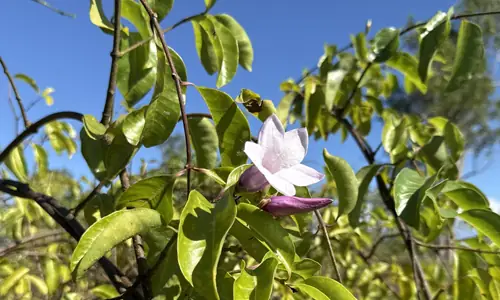
A major aerial survey along the Northern Territory–Queensland border and remote gulf coastline has detected several new rubber vine (Cryptostegia grandiflora) infestations, including a new infestation within the Northern Territory.
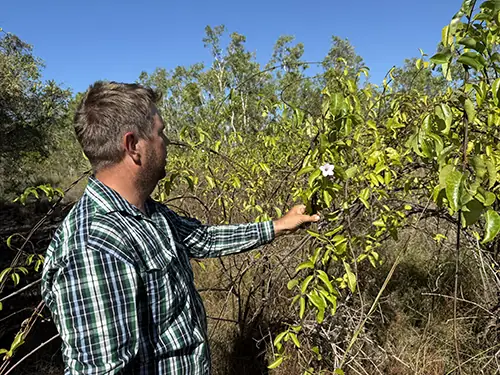
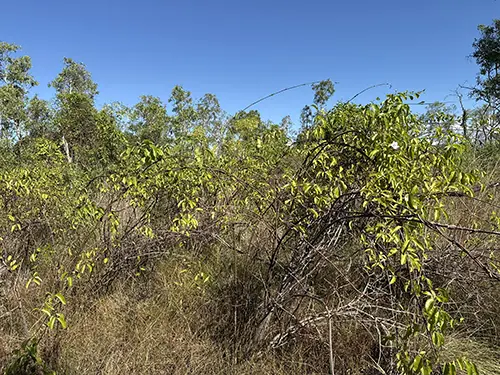
The Department of Lands, Planning and Environment’s Weed Management Branch recently undertook a comprehensive aerial survey in one of the most remote parts of the Northern Territory to help prevent the spread of rubber vine into the Territory. Rubber vine is a Weed of National Significance, a declared Class A weed in the Northern Territory, and considered one of Australia's worst invasive weeds.
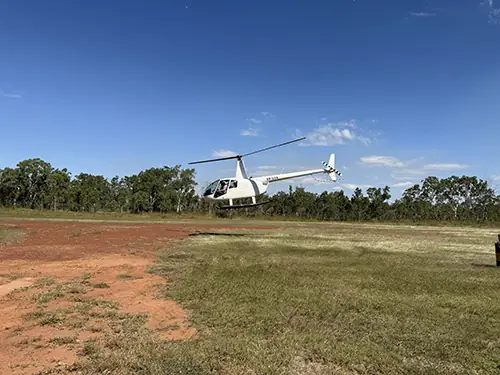
Over two-weeks in early May, aerial surveys were conducted along the Northern Territory–Queensland border and a section of the Northern Territory coastline from the border to Robinson River. The project brought together teams from the Tennant Creek and Katherine regions to support the operation.
It has been more than 15 years since a survey of this scale has been undertaken in the region. In 2004, an aerial survey located rubber vine approximately 50 km from the Northern Territory border, while a follow-up survey in 2009 detected infestations within 25 km of the border. Rubber vine was first detected in the Northern Territory in 2019, when an isolated infestation was identified along Settlement Creek. A smaller aerial survey in 2022 discovered a second infestation.
In 2026, surveys targeted remote and difficult-to-access areas to locate additional infestations and inform a strategic eradication approach across the region.
The team faced numerous challenges before and during the survey, including flooding, fuel logistics, difficult weather conditions, and poor road access. Despite these challenges, the survey was successfully completed, covering 7,117 km and detecting several new infestations in Queensland, as well as a new infestation along the Northern Territory coastline.
An on-ground control program is planned for early August to treat the newly identified infestations in partnership with landholders. A working group comprising key stakeholders has been established to coordinate ongoing surveillance, management, and control activities across the region.
Eradicating existing infestations and preventing further incursions into the Northern Territory remains a high priority for the Weed Management Branch.
This project is funded through the Australian Government's Supporting Communities Manage Pest Animals and Weeds Program.