New course in grass identification techniques delivered in Darwin
A 2-day introductory course in grass identification techniques was delivered for the first time by the NT Herbarium.
Helping increase knowledge of this diverse plant group is important for environmental management.
Grasses are a significant and important part of the biodiversity of the Top End. They are integral to the ecology of the tropical savannas, underpin much of our pastoral industry and present significant challenges to land managers.
However, they can also be difficult to identify. Grasses look very different to most other plants, making them difficult to ‘understand’, and the sheer number of species to choose from is enormous—with over 400 known from the Top End.
Most people lack confidence in identifying grasses and have difficulty in accessing and using resources to help increase their knowledge.
When the well-known local environmental consultancy EcOz sought assistance from the NT Herbarium for training in grass identification techniques, it was seen as an opportunity to develop and deliver training and resources to help fill this gap.
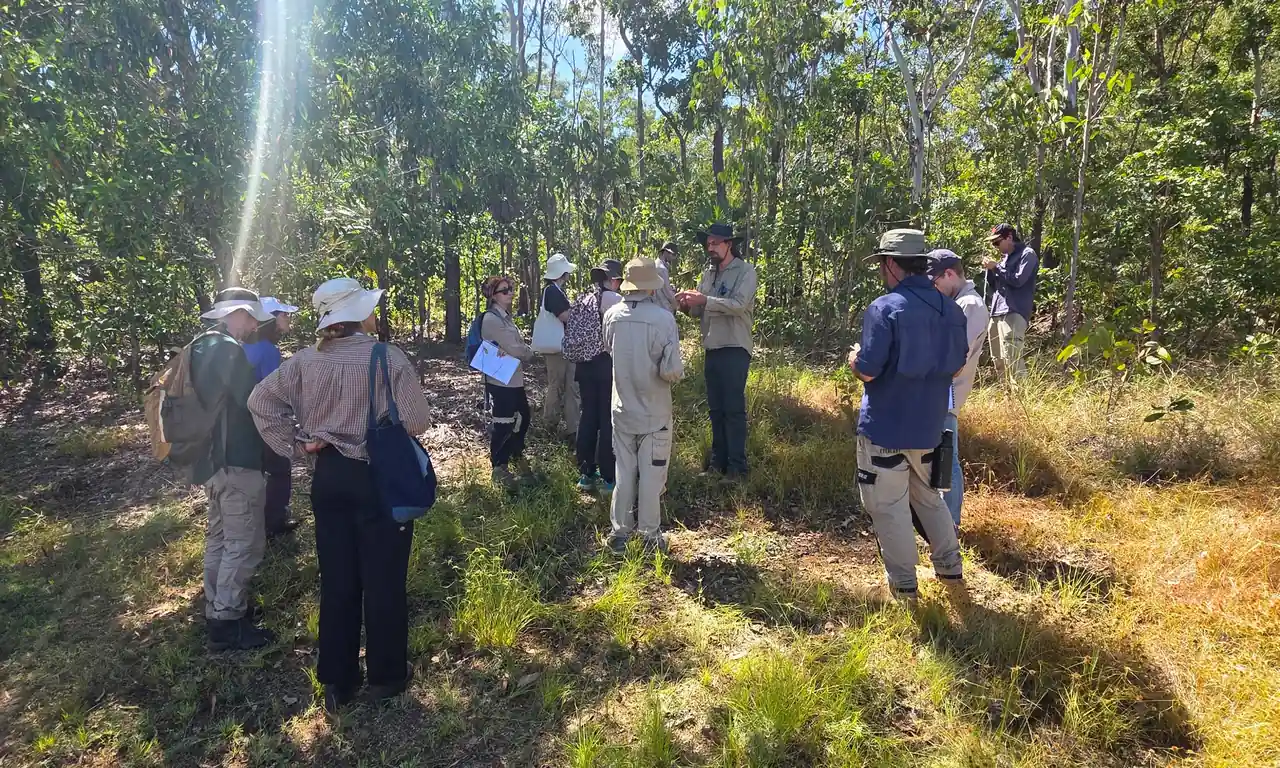
The course was held over 2 days in late-April, which coincided with the best time of year for attempting to identify grasses. Over the course of the 2 days, the 13 participants got a crash course in the world of grasses and then applied this knowledge in examining specimens with microscopes in the laboratory and on a field trip to sites around Darwin and Palmerston to learn field identification techniques.
The training was designed to provide a practical understanding of the complexities and terminology of grass morphology—how it differs, but also how it is basically the same as for other plants. This foundation is essential to enable people to use keys to identify local native and introduced grasses.
Customised resources were provided to help use clearly defined features to narrow down options and enable the first steps toward the identification of grass plants. Participants also engaged in both theoretical and practical sessions, covering topics such as how to use identification keys, the key identification features of particular grass groups, and the ecology of different species. Fieldwork was a highlight of the course, allowing attendees to apply their learning in a real-world setting.
Feedback from participants has been overwhelmingly positive with attendees expressing appreciation for the approach of the training and that it increased their confidence in identifying grasses.
Grasses pose challenges for identification, but this is not insurmountable. With training and practice people can develop confidence and skills in grass identification, assisted by the revised and updated course materials and keys.
The collaboration between the NT Herbarium and EcOz has provided a push towards improving grass knowledge and accessibility of resources.
We hope it will continue in years to come, and with a broad range of participants, ultimately leading to improved land management outcomes in the Northern Territory.