Developing new regional weeds strategies
The Weed Management Branch is working with the community to review regional weeds strategies.
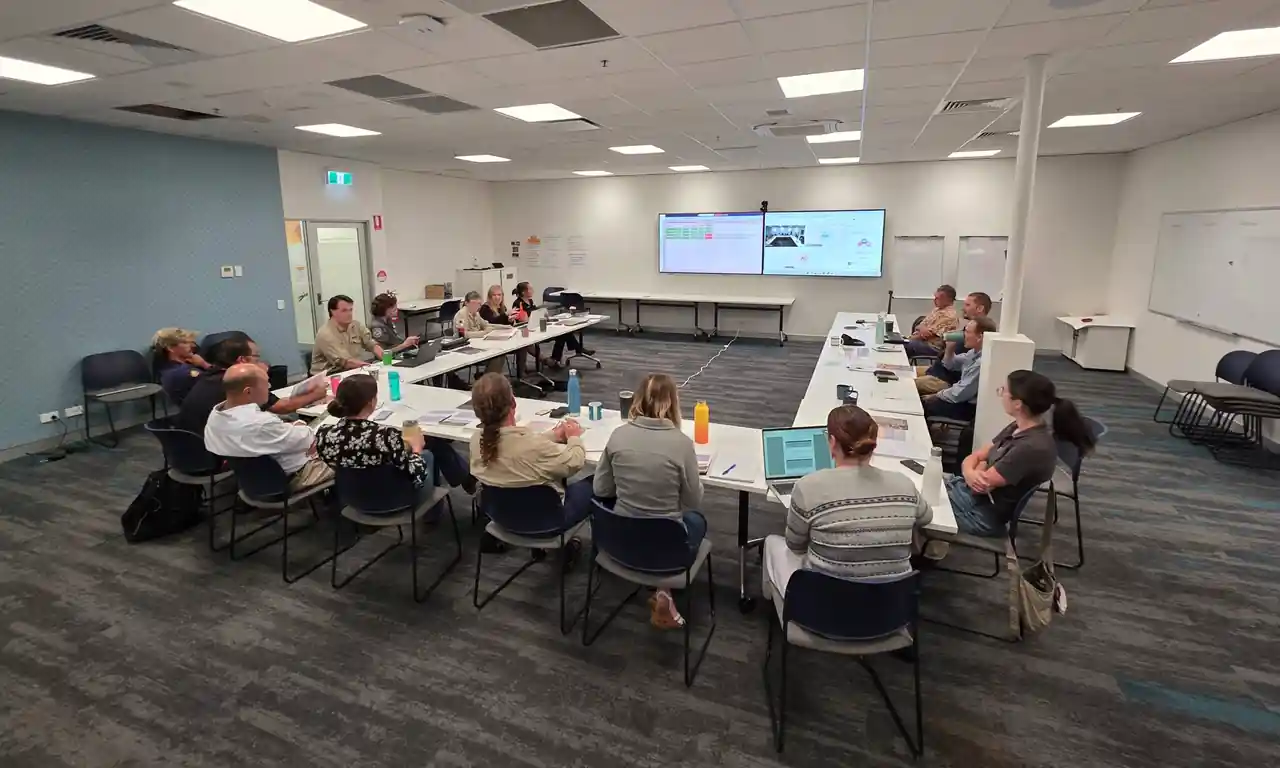
In April, stakeholders from across the Darwin region came together for the first time as part of the newly formed Darwin Regional Weed Working Group to discuss key weed management priorities and challenges.
The Regional Weeds Strategies 2021–2026 for Darwin, Katherine, Tennant Creek and Alice Springs will expire at the end of this year.
These documents outline a strategic approach for the NT Government and key stakeholders to reduce the adverse impacts of weeds across each region.
Reviewing the current strategies and developing new strategies for the next 5 years will require coordination and consultation with key landholders and stakeholders to ensure effective, landscape-scale weed management.
The newly formed working group met on 28 April and brought together stakeholders from a range of sectors, including Parks and Wildlife, Bushfires NT, Northern Land Council, Biosecurity, Defence, scientific research and the pastoral industry. Existing working groups in the Katherine, Barkly and Alice Springs regions have also met recently, marking the first steps in reviewing their respective strategies.
The initial stage in the review process involves the Weed Management Branch’s Weed Scientist, Michelle Franklin, introducing members to the weed risk matrix. This tool assesses weed species based on their invasiveness, impact, and potential distribution within the region, alongside the feasibility of management. By combining these factors, the matrix helps determine the best management approach for each species and sets regional priorities in close consultation with stakeholders.
Over the next 2 meetings, working groups will continue to refine these priorities and develop the Regional Weeds Strategies for 2027–2032.