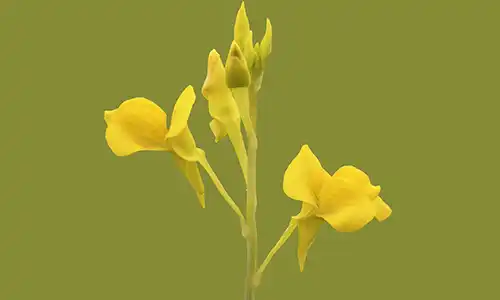
Bladderworts: treasures of the wet season from Darwin’s sandsheet wetlands
With water, colour and life at their peak, the wet season is the ideal time to grab a hand lens, head out to a local sandsheet wetland, and discover just how rich and delicate the communities they support really are. Sandsheet heath wetlands are home to a rich assortment of tiny carnivorous plants called bladderworts (Utricularia).
The wet season is the perfect time to explore the Darwin region’s sandsheet heath wetlands, where an extraordinary diversity of tiny carnivorous plants are thriving. The seasonally saturated sandsheets, especially of the Howard River catchment, are internationally significant because they support almost all the bladderworts recorded for the region, around 40 species, more than half of all currently named Australian species. They come in a multitude of weird and wonderful shapes and sizes, pinpricks of brilliant colour against the white sand.
As the wetlands and floodplains fill up over the wet-season, carpets of yellow, purple and white Utricularia appear among the sedges and grasses. These bladderworts are killers, employing tiny, sack-like traps, submerged and attached to their roots to suck in small aquatic animals in what is thought to be one of the quickest movements recorded in the plant kingdom (less than 1 millisecond). Sensitive hairs on the trap surface trigger special glands to pump water out from these traps, creating a vacuum which then sucks unsuspecting critters inside to be digested.
The digestion of prey in these traps allows the plants to source necessary nutrients which are not available from the highly leached, nutrient‑poor soils in which they grow. It also makes them a great conversation piece for curious visitors.
Look closely in shallow soaks, seepage lines and the edges of seasonal pools and you may find a few of these little treasures.
In efforts to get a better understanding of the ecology of these systems, NT Herbarium botanists are keeping a track of bladderworts in selected areas over the course of multiple years across the course of the wet season to better understand how these fascinating plants respond to changing condition within the wetlands.
If you would like to put names to what you see, there are some excellent local identification tools. A pictorial guide and overview of all Northern Territory Utricularia, including many from around Darwin, is available from Greening Australia and the NT Herbarium: 'The genus Utricularia in the Northern Territory.'
For more information about guides, reports and factsheets on the Howard sand plains bladderworts, go to the Greening Australia website.
With water, colour and life at their peak, the wet season is the ideal time to grab a hand lens, head out to a local sandsheet wetland, and discover just how rich and delicate the communities they support really are.
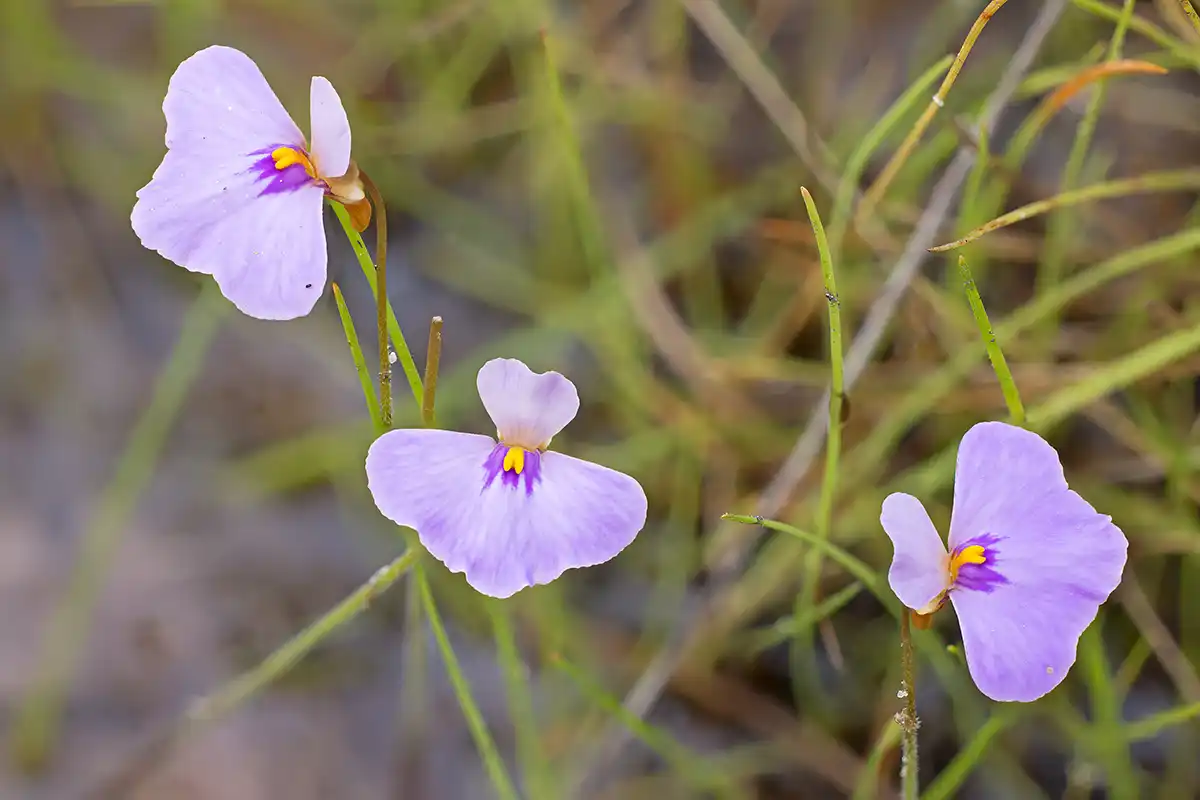
Purple-skirted Utricularia brennanii flower early in the wet season, one of the first bladderworts to do so in the season.