Advancing Salvinia biocontrol in the Northern Territory
A rare interstate collaboration saw Northern Territory weed managers and Aboriginal Rangers travel to New South Wales to strengthen biological control of salvinia (Salvinia molesta) using the salvinia weevil (Cyrtobagous salviniae).
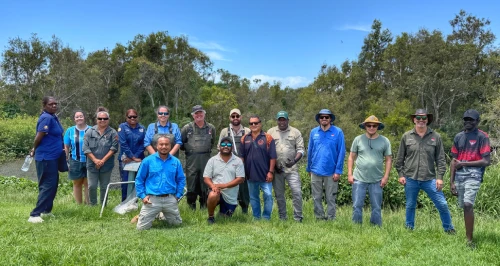
Late last year, Weed Management Branch staff travelled to Grafton, New South Wales (NSW), alongside the Territory’s Djurrubu Rangers, Malak Malak Rangers and Parks Australia, in a rare interstate collaboration focused on strengthening biological control of salvinia (Salvinia molesta) using the salvinia weevil (Cyrtobagous salviniae), through shared, hands‑on learning between government agencies and Aboriginal Rangers.
Working with specialists from the NSW Department of Primary Industries and Regional Development and Biosecurity Queensland (BQ), the experience continues to shape the ongoing salvinia biological control program in Kakadu National Park, delivering long‑term benefits through the Future Drought Fund – Resilient Landscapes Program.
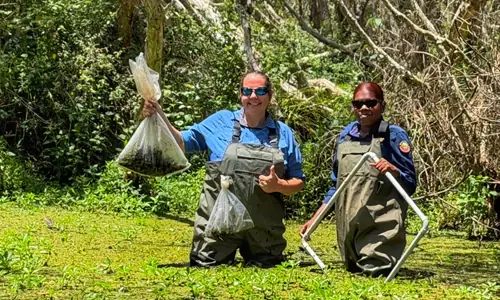
While the program focused on declared weed salvinia, a serious aquatic species in the Northern Territory, training also covered broader field monitoring techniques, sampling methods and accurate identification of insect damage.
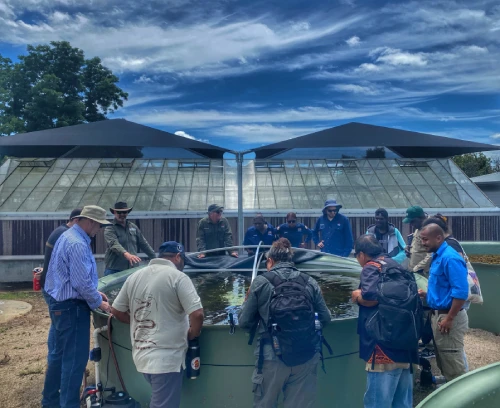
At the Grafton biological control breeding facility, participants gained hands‑on experience in the large‑scale rearing and monitoring of biological control agents targeting other high‑priority weeds, including cabomba, water hyacinth, pistia, cat’s claw creeper and giant rat’s tail grass.
Field activities near Byron Bay included input from a BQ scientist, supporting cross‑jurisdictional learning and knowledge sharing.
The visit strengthened partnerships and Aboriginal Ranger engagement, with outcomes already shaping weed management in the Northern Territory and further collaboration planned in Kakadu this year.