Threatened land snail survey in the centre
The Flora and Fauna division and Australian Museum recently completed a joint field survey targeting threatened land snails at Watarrka National Park and Finke Gorge National Park.
Dr Frank Köhler from the Australian Museum is one of Australia’s foremost land snail experts and has described a number of new snail species from the Northern Territory. He also works on land snail conservation projects at several locations, including Lord Howe Island off the coast of NSW.
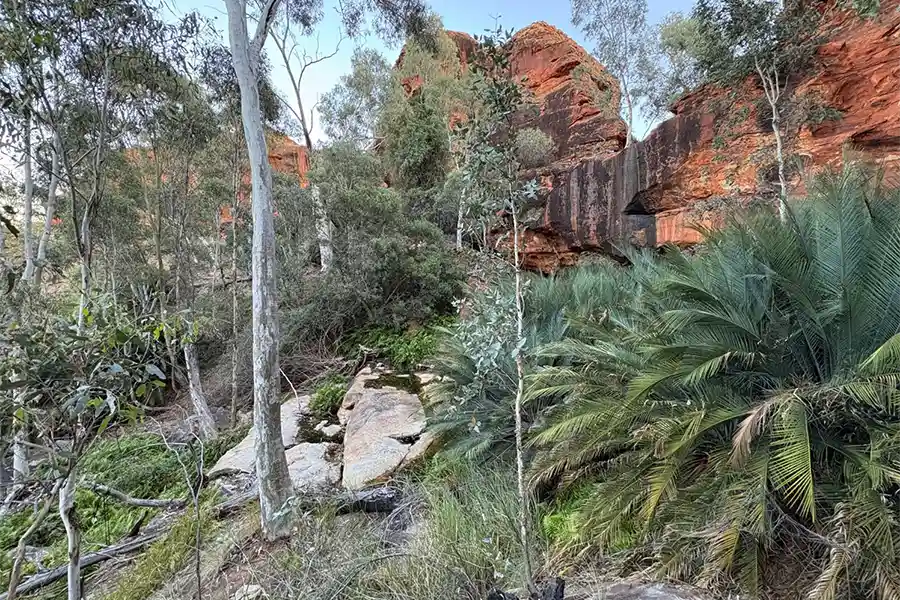
At Watarrka National Park we targeted the tiny Red Centre Pinwheel Snail (Tateropa aeumulea), known only from Penny Springs. This species is listed as Vulnerable in the NT and had not been seen alive since the type specimen was collected during the Horn Expedition in 1894!
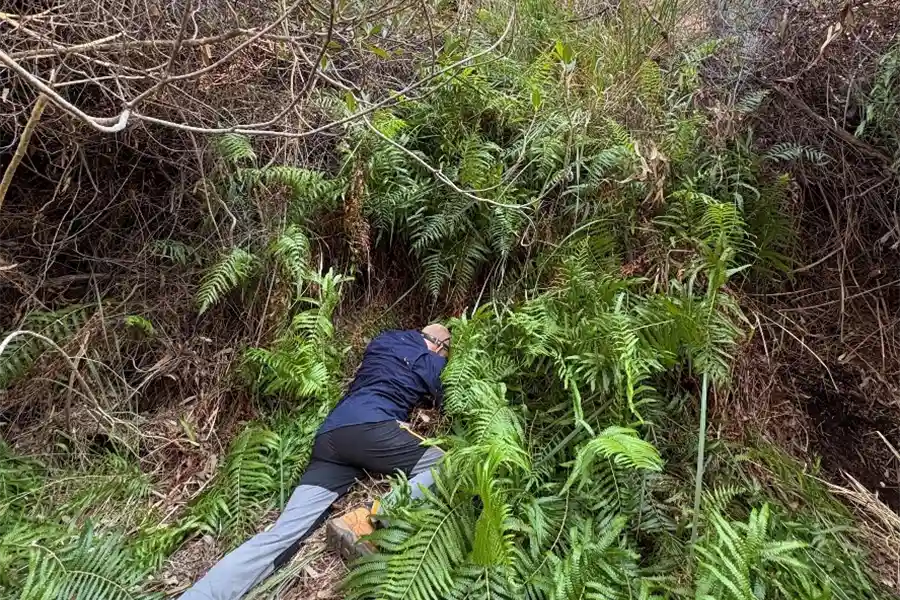
Excitingly, we found several of these snails alive in the wet soil under cycads and ferns in the springs. We also searched for this snail in the wet soil at Kathleen Springs and Stokes Gorge. While we found other small widespread snails at these sites, we did not locate any Red Centre Pinwheel Snails. This gives us some confidence that Penny Springs supports the only population of this species and is therefore a priority location for conservation management. While the springs seem to be too wet for buffel grass, hot wildfire is likely to be a key threat, particularly with the spread of buffel grass below and either side of the springs.
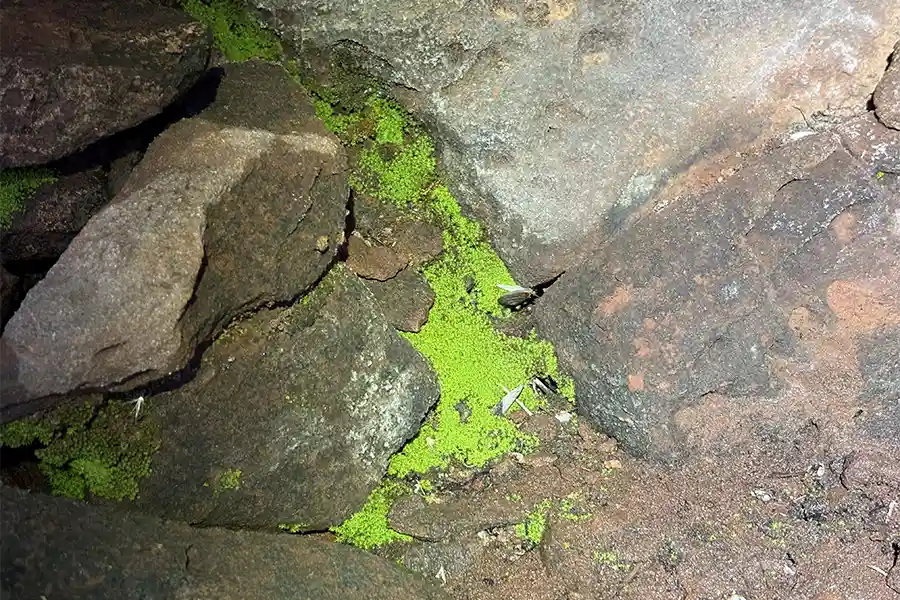
Next we travelled to Finke Gorge National Park where we targeted a larger and highly distinctive threatened snail named Hillier’s Keeled Snail (Divellomelon hillieri). This species is also listed as Vulnerable in the NT and we think it only occurs on a 300 m section of escarpment at the bottom end of Palm Creek, across from the old ranger house. We were able to map the distribution of this species at this site from the presence of old shells. We were also extremely lucky to have storms on our last night, with the rainfall bringing the snails out from their deep rock crevices. Unfortunately, this site is covered with dense buffel grass and we are concerned that repeated hot fires, fuelled by buffel, will impact the foraging habitat of this snail. This site is therefore a priority for future weed control. We are also really keen to involve the Tjuwanpa Rangers and Traditional Owners in future snail surveys and monitoring at this site and elsewhere.
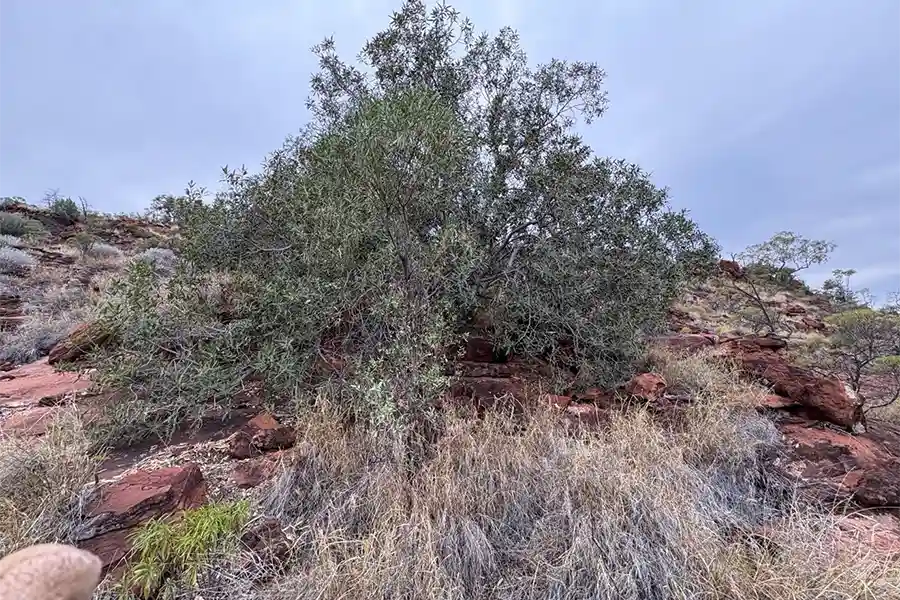
Another observation at both Watarrka and Finke Gorge was the importance of fig trees for many different snail species. At Palm Valley we found up to 7 snail species under a single fig tree! Many of the fig trees we searched had buffel grass encroaching them and we recommend that easily accessible trees should also be managed for buffel grass to ensure they are not getting repeatedly burnt by hot wildfires.