70 years of Water Resources – 1970s
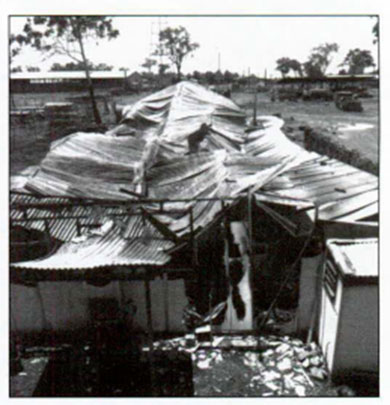
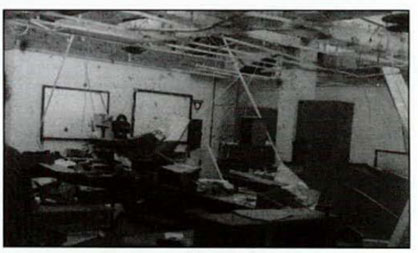
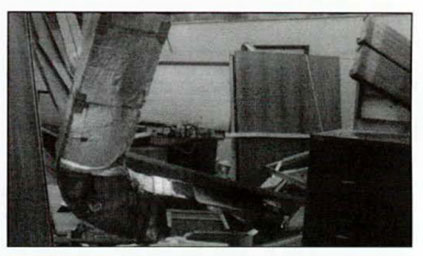
The 1970s were a big decade for the division with a fire destroying the microbiology laboratory at the Winnellie depot to huge wet seasons followed by cyclones.
The early 1970s were some of the wettest years on record across the Territory, with the 1973/74 wet season producing major flooding in most areas of the Northern Territory and the Todd River flowing for many months. This was followed by three cyclones in the Top End in the 1974/75 wet season being Selma, Amelia and Tracy.
Cyclone Tracy caused the largest ever evacuation and reconstruction operations in Australia with 80% of buildings destroyed or left seriously damaged and a total of 35,362 people (of the approx. 47,000 population) evacuated to southern cities. A number of Water Resources Division staff departed and never returned with others relocating to Alice Springs, Katherine, Gove and Canberra. Staff that relocated to Katherine settled in construction camp housing at the Tindal air strip and built an office and depot at the Victoria Highway.
The division played a crucial role in the immediate relief efforts and the subsequent rebuilding of Darwin. In the wake of the cyclone, Darwin’s water supply and sanitation systems were severely damaged leaving residents without access to clean water. The division supported Darwin by providing access to water when the main supply was cut and the drilling crew constructed temporary sewerage facilities. The division also contributed to the broader effort to rebuild Darwin and improve its infrastructure. This included the reconstruction of damaged infrastructure and the implementation of new building codes to improve safety standards. The division, along with other agencies, played a role in developing and implementing reforms, which included the establishment of the Northern Territory Emergency Service in 1975.
While the division focused on data collection and water supply development in its early years, Cyclone Tracy forced a decentralization and restructuring, leading to a more active role in disaster response. Today, the division is a critical part of the Territory’s emergency management, providing flood warning services to a number of communities.
During 1973 to 1977 there was a high period of rainfall which saw previously recorded high flood levels being exceeded at more than 114 gauging stations and twenty plus gauge stations recording structures inundated. In 1976/77 the rainfall in Darwin was 2196 mm. These rainfall events throughout the Territory produced widespread flooding in western Arnhem, Daly, Katherine, Roper and Victoria River districts with prolonged flooding occurring in the Katherine, King and Daly Rivers. The Victoria Highway was flooded by the King River and the Ranken and James Rivers closed the Barkly Highway, with both highways closed for a period of three weeks or more. Flooding occurred in Alice Springs with the Finke River closing the Stuart Highway for a time and the highway at Newcastle Waters impassable for nearly a week.
By 1976 there were 80 rain gauges established in the Northern Territory. The monitoring network was divided into 9 areas and with two men per area. The most intense hydrographic network coverage in the Northern Territory was the Magela Creek system (with a catchment of 1435 square kilometres) had 19 flow gauging and 9 rain gauges stations.
During 1978 there were a number of major groundwater projects across the Territory which included investigations carried out for the new Yulara Tourist Village situated at Ayers Rock with the establishment of production bores. As well as water supplies in Jabiru, Alice Springs-Mereenie, Tennant Creek and Yulara and water supply assessment at Goulburn Island, Millingimbi, Peppimenani, Ti-Tree, Kulgera and Gove.
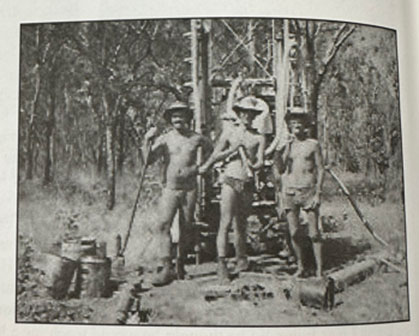
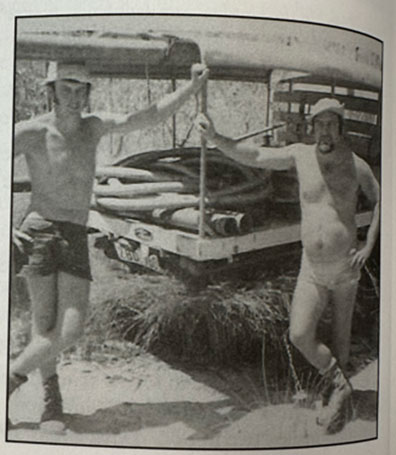
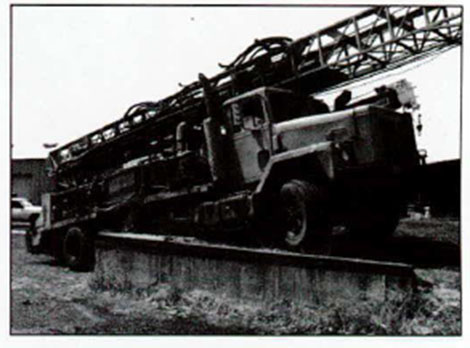
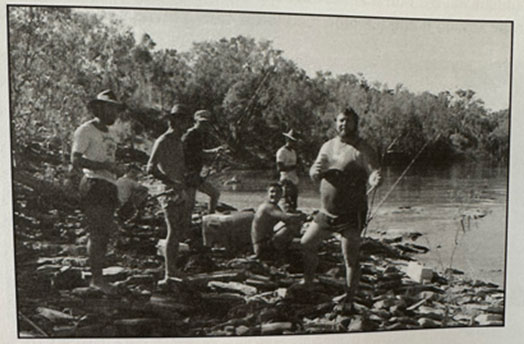
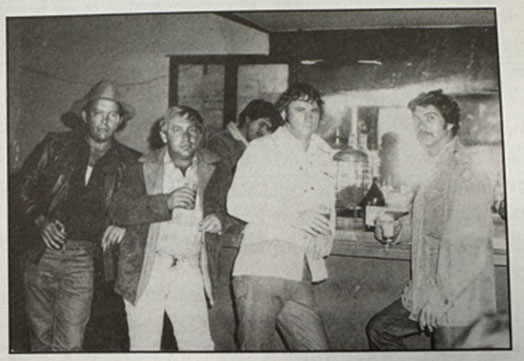
Towards the end of the 1970s the division purchased drilling rig No 22, believed to be the first TH60 unit sold in Australia, followed by Rig No 23, an R0300. In addition, three 10 Ton and one 5 Ton Smeal cranes purchased for bore test operations and mounted on MAN trucks. The drilling teams spent weeks at a time out in remote locations across the Territory often camping near their trucks or under them. A drill foreman received an annual salary of $4,885 while a drillers offsider annual salary was around $3,000. The camping allowance was about $1.70 per day but this was also in the day where a slab of beer was about $6.40.
By 1977, the structure of Water Resources comprised of multiple sections being Project Investigations; Hydrographic; Water Quality and Pollution; Laboratories; Groundwater Operations; Groundwater Assessment; Groundwater Basin Management; Rural Advisory Service and Administration.
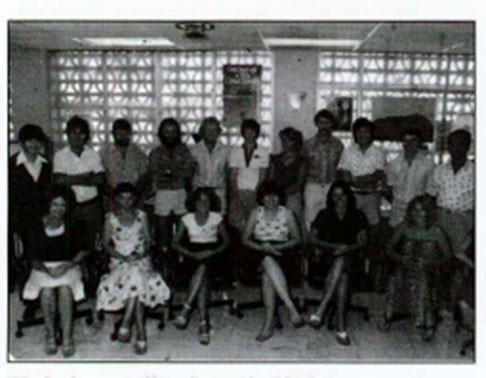
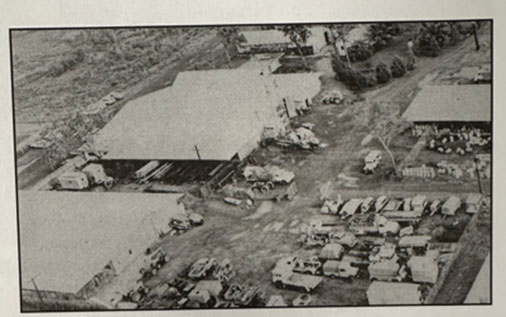
With self-government in 1978, employees were transferred to be employees of the NT Public Sector. By 1979 the Water Resource division numbered 315, with 239 in Darwin including 43 staff at Winnellie Depot. Fifty-nine were located in Alice Springs and 17 in Katherine.
Next month will we highlight the 1980s
Credits to Tales from the Field NT Water Resources 1955-2008 and Water Resources 40 years on History of the NT Water Resources Division.